
Winter Break: When Thousands of Children Trade Their Time Off for the Streets
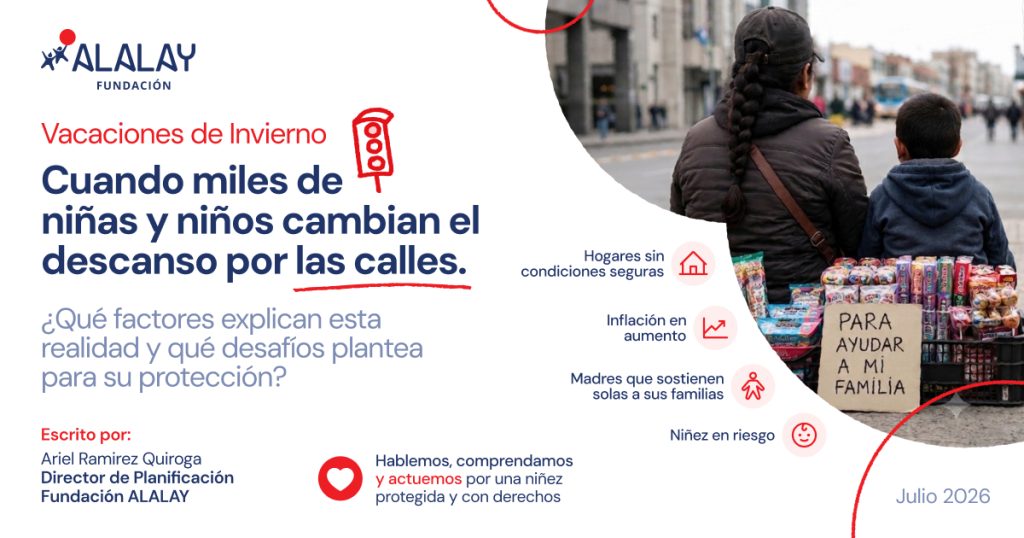
Winter Break: When Thousands of Children Trade Their Time Off for the Streets For most children and adolescents, winter break is a time for rest, recreation, and strengthening family bonds. However, for thousands of Bolivian children, this period means something very different: temporarily leaving school to join their families in informal economic activities, mainly on the streets, in markets, at fairs, at bus terminals, and even in hazardous areas such as the mines. Over the past few weeks, intervention teams from the ALALAY Foundation have observed a significant increase in the number of children and adolescents accompanying their mothers in informal trade activities, such as street vending and the sale of food, candy, beverages, fruit, used clothing, and other products. Although these children often do not directly handle the sales, they spend long hours in public spaces exposed to multiple physical, psychological, and social risks, sometimes remaining on the streets for more than 12 hours a day alongside their families in order to earn as much money as possible. This phenomenon cannot be analyzed solely from the perspective of child labor, since it does not involve direct remuneration; rather, it must be understood within the complex economic context currently facing Bolivia, characterized by a sustained increase in the cost of living, a loss of household purchasing power, the growth of the informal sector, and rising social vulnerability. A recent study by Fundación Jubileo points out precisely that Bolivia is facing an economic crisis, cumulative inflation, high levels of informality, and stagnant production—factors that are deteriorating the living conditions of thousands of Bolivian families. Add to this situation 50 days of roadblocks, primarily in the western part of the country, which caused the price of the basic food basket to rise by up to 150%, a situation that severely affected the upper and middle classes—which, based on this analysis alone, illustrates the terrible impact on these highly vulnerable families. Inflation Hits Poorest Families First Inflation does not affect all households equally. While a family with stable income can partially absorb price increases, households that survive on informal commerce experience an immediate reduction in their ability to buy food, medicine, transportation, and basic services. In Bolivia, over recent months, the price hikes in essential foods—such as meat, oil, rice, sugar, vegetables, hygiene products, and transportation—have forced thousands of families to increase their working hours just to maintain an income similar to what they earned before. If they previously spent 8 hours on the streets, they must now spend more than 12 hours. For those living off informal commerce, there is no fixed salary, paid vacation, health insurance, or job stability. Every day without a sale represents a day without income. As they often mention, they cannot afford to get sick or miss a single day, regardless of extreme weather conditions like severe cold (in the western highlands) or extreme heat (in the eastern lowlands). Therefore, during school vacations, many mothers take advantage of the fact that their children are not attending classes to bring them along to their workplaces. This is not out of a desire to involve them in labor activities, but because they have no other alternative to simultaneously guarantee their children’s care and generate family income. Poverty Has a Child and Female Face A study prepared by the Jubileo Foundation shows that poverty in Bolivia has a clearly identifiable profile: it mainly affects women, young populations, indigenous people, and informal workers, revealing that children constitute the most vulnerable age group. According to this analysis, nearly 50% of children under 12 live in poverty, a percentage higher than that observed in the adult population. Similarly, women present higher levels of poverty than men due to labor gaps, the burden of domestic work, and difficulties in accessing formal employment. This reality is clearly reflected on the streets. During the field sweeps conducted by the ALALAY Foundation, the vast majority of adults carrying out economic activities are women accompanied by girls and boys. This situation is no coincidence; many of them are single mothers, separated, or abandoned by their partners, who fully assume the economic responsibility and care of their children. Technically, we call these single-parent families, a situation reflected when a mother faces the survival of the entire household alone. One of the aspects causing the greatest concern during ALALAY’s fieldwork is the growth of female-headed single-parent families. When ALALAY’s street teams ask mothers why their children spend so many hours on the streets, the response is usually repeated with little variation: “I have no one to leave them with.” “I live alone with my children.” “If I don’t work, we don’t eat.” “I’m afraid something will happen to them at home.” These responses help us understand that the presence of children and adolescents in public spaces does not always stem from an economic decision geared toward child labor, but rather from a care strategy developed by mothers facing extreme levels of precariousness, which I explain below. Many Families Live in Rented, Single-Room Spaces That single room functions simultaneously as a bedroom, kitchen, dining room, and living space. There are no safe areas for children to remain alone for ten or twelve hours. Mothers express constant fear of domestic accidents, fires caused by improvised stoves, gas leaks, electrocutions, or situations of violence and sexual abuse. In numerous cases, these housing units are located within tenement houses (inquilinatos) where multiple families coexist without adequate security conditions. Alternatively, some families act as caretakers—meaning that as a form of rent payment, they offer to watch over a house, but the owners similarly offer them only a single room. From the perspective of these mothers, bringing their children with them represents the protective mechanism they consider least risky. Paradoxically, this strategy exposes them to other equally serious dangers, as well as a lack of understanding from some citizens who think the mothers are using the children, when their reality is entirely different. The Streets are Also High-Risk Spaces Although many families
We are kicking off the 2026 fiscal year by strengthening our institutional direction
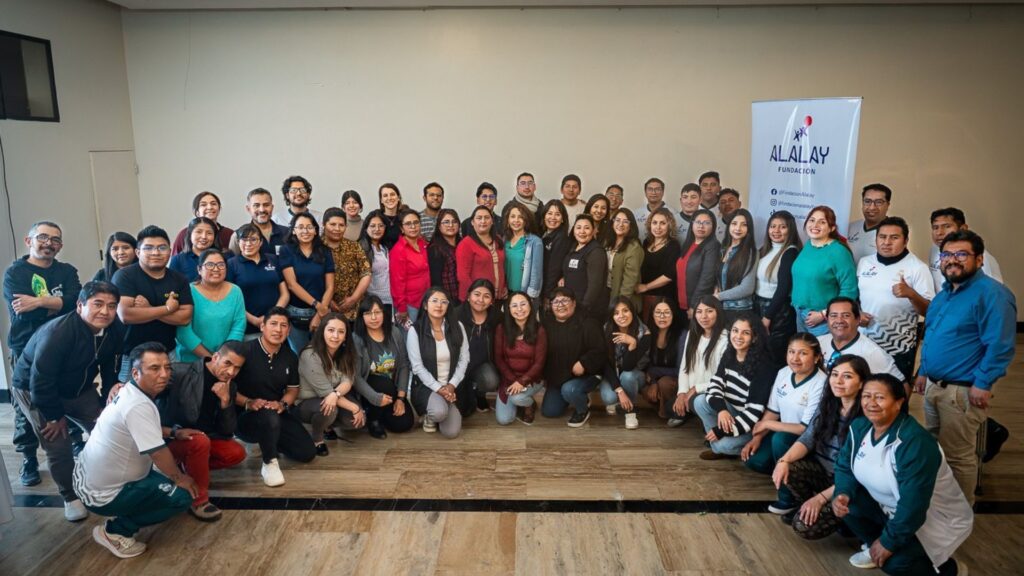
We are kicking off the 2026 fiscal year by strengthening our institutional direction At the ALALAY Foundation, we began the 2026 fiscal year by consolidating our strategic direction through a kickoff workshop to share our Institutional Policies and our 2025–2028 strategic plan. We held these workshops in La Paz and Santa Cruz, where our teams participated in sessions focused on reflection, dialogue, and collective decision-making. This process allowed us to align our criteria, prioritize courses of action, and strengthen a shared vision of the impact we aim to make in the coming years. We also consolidated our organizational capacities to ensure ethical, relevant interventions centered on the well-being of children and adolescents. We began this fiscal year with a commitment to continue creating sustainable opportunities for children and adolescents living on the streets and at social risk.